Human IFN-Alpha All Subtype ELISA Kit, High Sensitivity (Serum, Plasma, TCM)

Catalog Number: 41115

This ELISA measures human IFN-Alpha levels in normal & autoimmune sera, plasma, and tissue culture media (TCM) with an LLOQ of 1.95 pg/ml. It detects all 12 IFN-Alpha subtypes for accurate, total measurement in samples.


Product Name: VeriKine-HS Human Interferon-Alpha All-Subtype ELISA Kit (Serum, Plasma,TCM)

$747.00
Pack Size
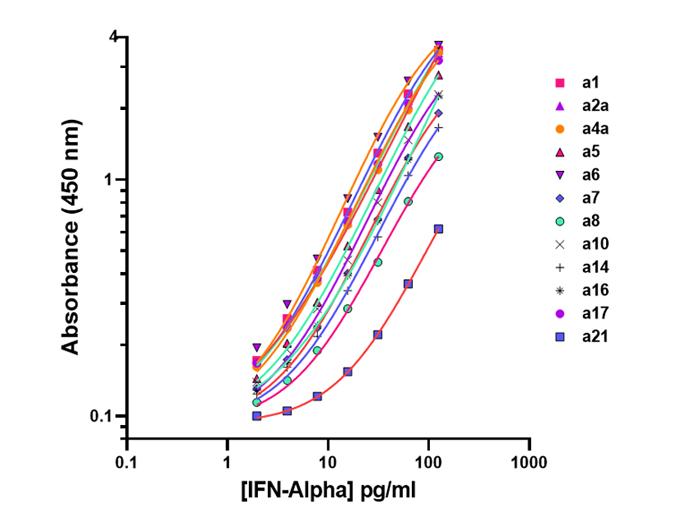
Representative Human IFN-Alpha Subtype Standard Curves in Healthy Donor Serum (HDS).
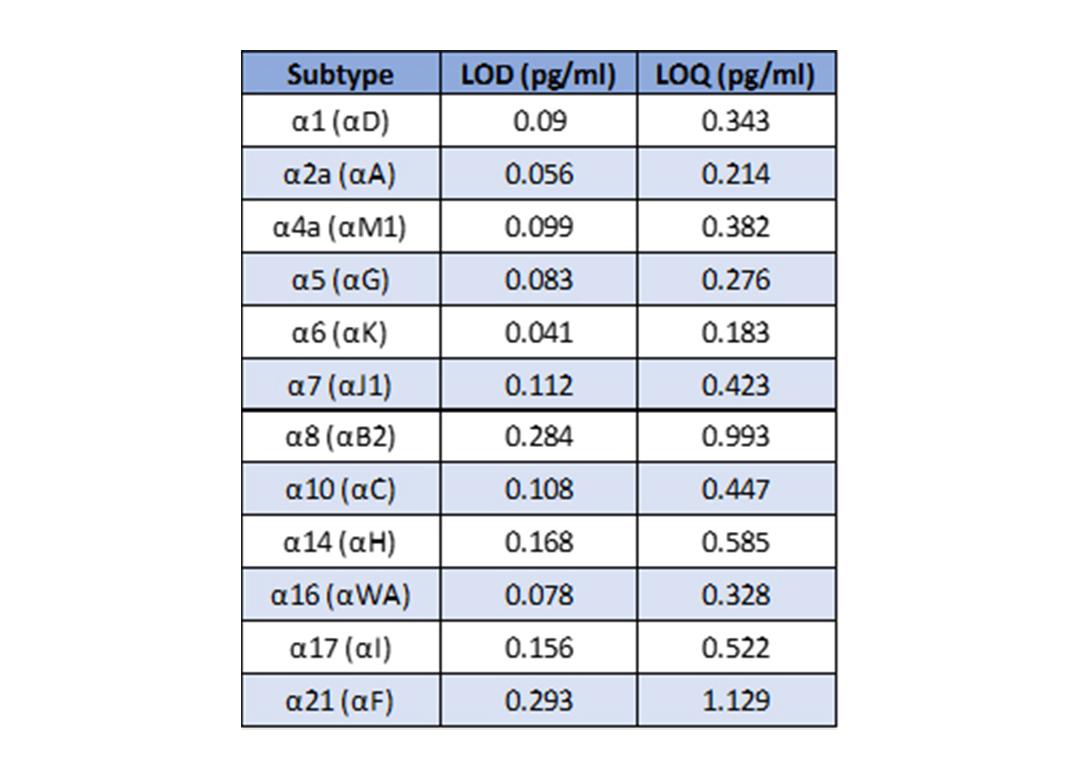
Representative Lower Limits of Quantitation and Lower Limits of Detection (pg/ml) in Normal Human Serum for each Human Interferon Alpha Subtype using PBL's High Sensitivity Human IFN Alpha ELISA (41115).
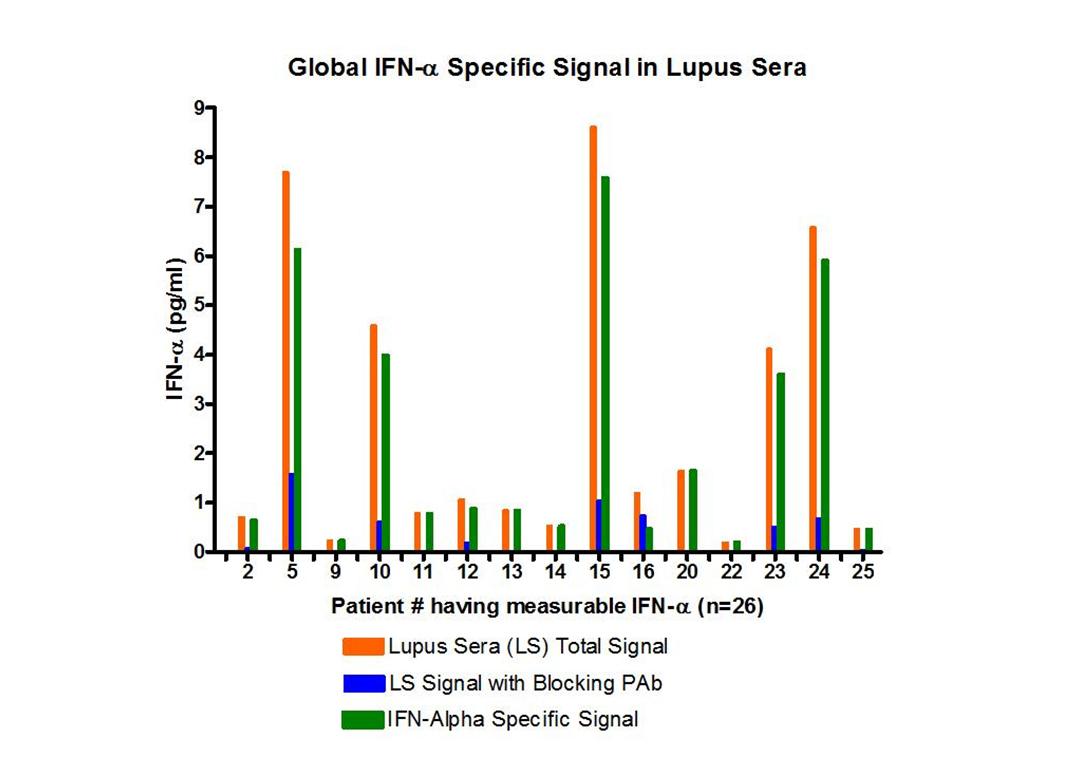
Global Human IFN-Alpha Specific Signals in Lupus Patient Sera using PBL's High Sensitivity Human IFN Alpha All Subtype ELISA (41115)
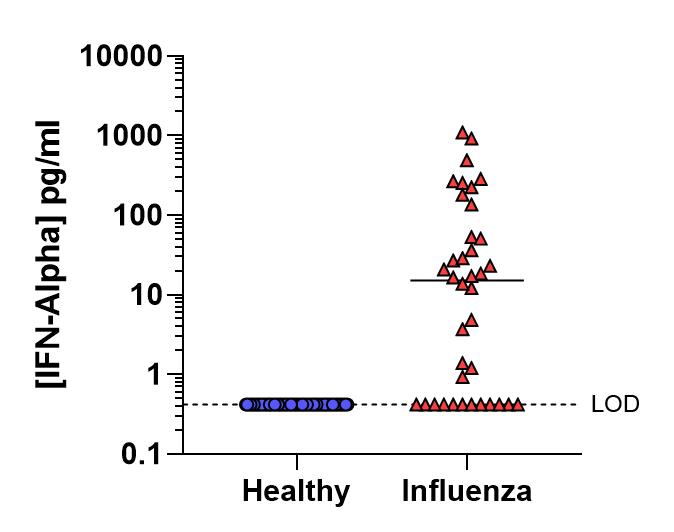
IFN-Alpha level in Healthy and Influenza patient serum samples measured by PBL 41115 ELISA

Product Info

Matrix CompatibilitySerum, Plasma, Tissue Culture Media
Assay Range1.95 - 125 pg/ml
LLOQ

1.95 pg/ml

Need more sensitivity? Check out our Sample Testing Services

Assay Length22 hours, 30 minutes
SpecificityHuman Interferon Alpha


This high sensitivity Human IFN-Alpha ELISA kit is designed to provide accurate low pg/ml measurement of all human IFN-Alpha subtypes in autoimmune sera, normal serum, EDTA plasma, and tissue culture media (TCM). This unique feature provides an improved view of global IFN-Alpha production in sample analysis. 


*For a TCM-compatible all-subtype ELISA, we recommend our Human IFN-Alpha All-Subtype ELISA Kit, High Sensitivity (Cat. No. 41135-1).

Documentation

CV and Spike Recovery

Inter-Assay: ≤ 10%


Intra-Assay: ≤ 8%


Spike Recovery: ≥ 80% in Serum

Cross-reactivity

Cross-reacts with

  • Cynomolgus/Rhesus IFN-α


No cross-reactivity against

  • Human IFN-β, IFN-γ, or IFN-ω
  • Mouse or rat IFN-α, IFN-β or IFN-γ
  • Bovine IFN-τ
SynonymsIFN alpha, IFN-a, Multisubtype Interferon Alpha, Multisubtype Leukocyte Interferon, Leukocyte IFN, alpha interferon, interferon alfa, IFN alfa, interferon alpha 2a, IFN alpha 2a, interferon a, interferon alpha 2b, IFN alpha 2b, Type I interferon alpha, Type I IFN alpha
Storage2-8°C
Expiration DateOne year from the date of manufacture
Shipping ConditionWet Ice


Materials Provided

  • Pre-coated microtiter plate(s)
  • Plate Sealers
  • Wash Solution Concentrate
  • Human Interferon Alpha Standard, 10,000 pg/ml
  • Sample Buffer
  • Standard Diluent
  • Antibody Concentrate
  • HRP Conjugate Concentrate
  • Antibody Diluent
  • HRP Diluent
  • TMB Substrate
  • Stop Solution


Additional Materials Required (Not Provided)

  • Microtiter plate reader capable of reading a wavelength of 450 nm
  • Variable volume microtiter pipettes
  • Adjustable multi-channel pipette (50-200 μl)
  • Reagent reservoirs
  • Wash bottle or plate washing system
  • Distilled or deionized water
  • Serological pipettes (1, 5, 10 or 25 ml)
  • Disposable pipette tips (polypropylene)

Tips, Tools and Troubleshooting:


Background


Interferons (IFNs) are a family of mammalian cytokines initially characterized by their ability to inhibit viral infection. They are synthesized and secreted by most cell types in response to pathogens. In addition to their antiviral properties, IFNs have also been shown to exhibit anti-proliferative, immunomodulatory and many other activities.


In humans, IFN-Alpha consists of a group of proteins that are greater than 85% homologous by amino acid sequence. Numerous individual human IFN-Alpha subtypes have been identified; many display different properties. It remains unclear why there are multiple IFN-Alpha subtypes. A variety of studies suggested they possess overlapping but also unique sets of biological activities.