
Meso Scale Discovery (MSD) Assay Service
- Over 180 validated fit-for-purpose assays in singleplex and preconfigured multiplex formats
- Broad range of analytes including Cardiac biomarkers, Inflammatory cytokines, Intracellular signaling molecules, Neurodegenerative & Oncological markers, and more
- Low sample volume requirement
Broad dynamic range for healthy and disease state analyte quantitation
See below for representative data
PBL's sample testing and screening services will expedite your research and development work. Our expert knowledge in MSD-ECL technology and assay performance allows our services to be tailored to meet your specific requirements under fit-for-purpose guidelines. Entrusting your sample testing analysis to our experienced team of scientists and quality control experts ensures results you can rely upon.
PBL Assay Science helps turn your data into actionable knowledge.

Speak to a Scientist
Key Features offered on Meso Scale Discovery MSD-ECL Platform
- Low volume neat sample requirement (< 30 ul) ensures efficient use of precious samples
- Broad dynamic range allows high and low abundance analytes within the same assay
- Robust matrix tolerance including serum, plasma, tissue culture media, and complex biological matrices
- Singleplex and Multiplex assays with excellent lot-to-lot consistency
Powered by Meso Scale Discovery technological platform, Rockville, MD, U.S.A.
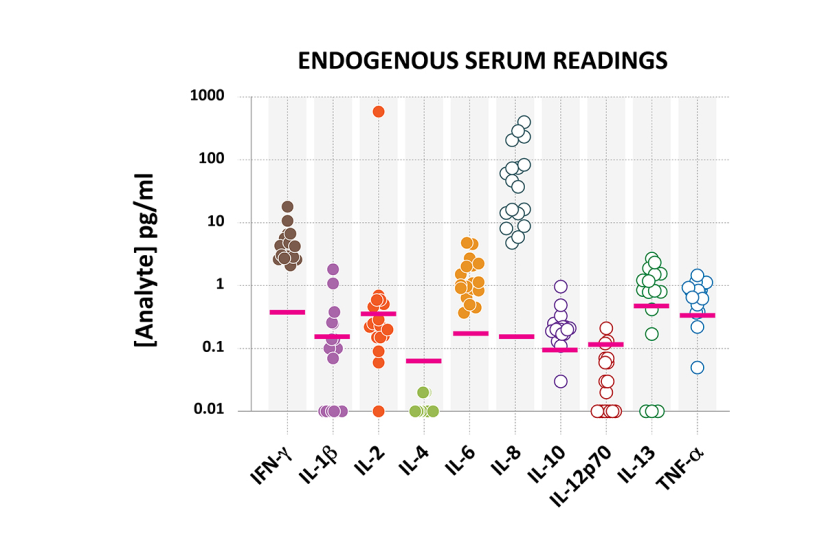
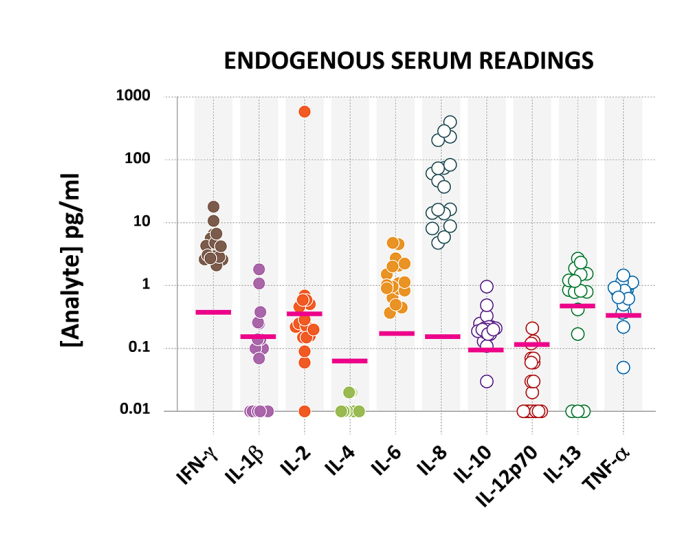
Basal expression of several analytes can be quantified with the MSD V-Plex Human Proinflammatory Panel I 10-Plex Assay. 18 healthy donor human serum samples were tested using 25 ul of sample per well.
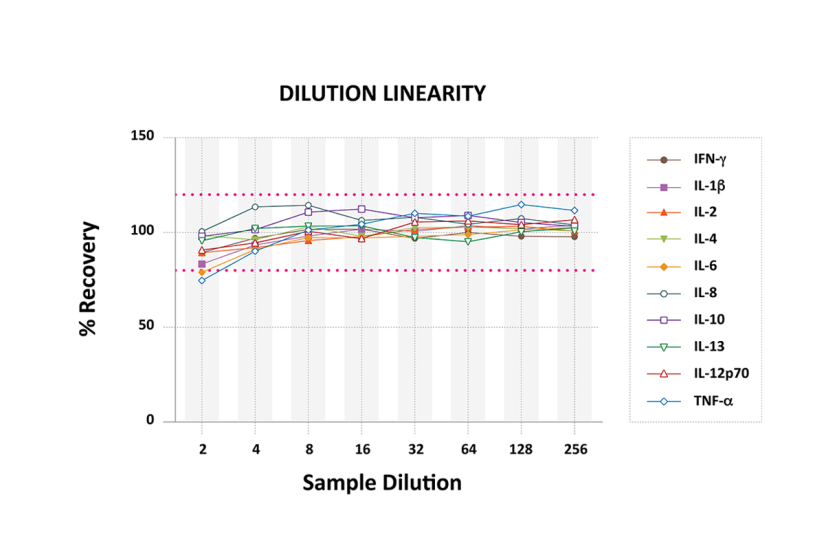
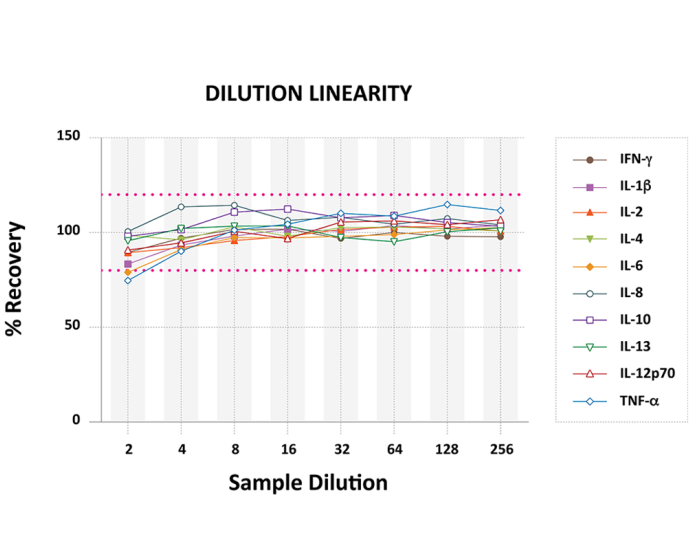
The MSD V-Plex Human Proinflammatory Panel I 10-Plex Assay demonstrates excellent linearity across 2 logs of dilution. Serial dilution of healthy donor serum spiked with a recombinant calibrator.
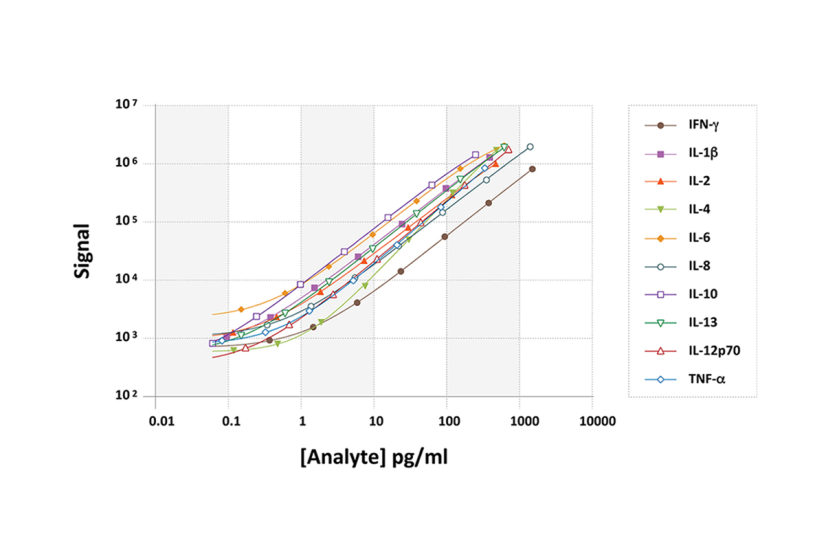
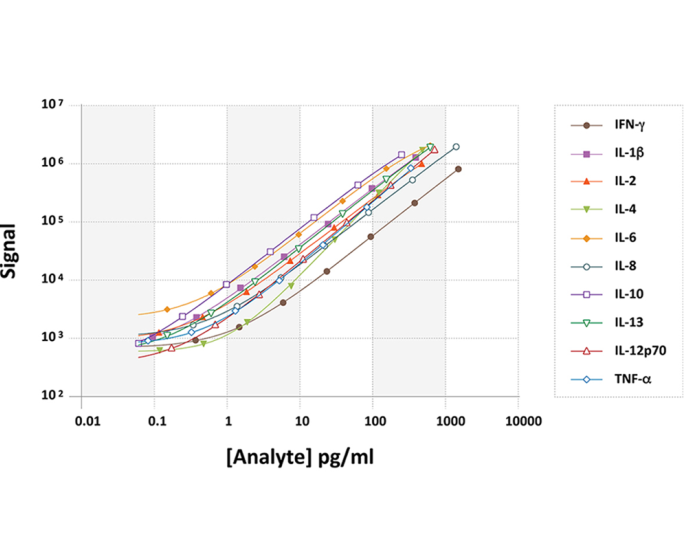
The MSD V-Plex Human Proinflammatory Panel I 10-Plex Assay demonstrates broad dynamic range of 4 logs for all analytes.
3 Citations:
- Tobi, M. et al.,(2025), "Immune Signatures in Post-Acute Sequelae of COVID-19 (PASC) and Myalgia/Chronic Fatigue Syndrome (ME/CFS): Insights from the Fecal Microbiome and Serum Cytokine Profiles", Biomolecules, 15(7):928, DOI: 10.3390/biom15070928 (link)
- Thi Thanh Nhan, N. et al., (2025), "Oncolytic adenovirus inhibits TNBC tumor growth/metastasis in mice by targeting TGFB and overexpressing GM-CSF", Molecular Therapy: Oncology, PMID: 40104170, DOI: 10.1016/j.omton.2025.200936 (link)
- Shin S.C. et al., (2024), "The Safety and Efficacy of Systemic Delivery of a New Liver-de-targeted TGFβ Signaling Inhibiting Adenovirus in an Immunocompetent Triple Negative Mouse Mammary Tumor Model", Res Sq. (Preprint), DOI: 10.21203/rs.3.rs-3317863/v1 (link)