
When it comes to ELISA kits used for the detection of protein biomarkers, one observation we have made at PBL Assay Science—over and over again—is that not all assays are created equal. From our 30+ years of experience designing and manufacturing ELISAs, and from our experience qualifying and running third-party ELISAs for clients, we have identified some common areas of concern with assay design, performance, and characterization, including:
Designs that do not fully account for the biological variability of the analytes of interest. For example, some analytes exist in different isoforms or as part of molecular complexes, which many assays are not optimized to detect.
Lack of sensitivity in quantitation. Ideally, ELISAs should be designed to accurately quantify low concentrations of analytes in healthy-donor samples, to provide a baseline for comparison with disease-state samples.
Inaccurate quantitation in the presence of interfering agents commonly found in real-world samples. Biological components in both healthy and disease-state samples can artificially reduce signal, if the assay is not optimized to account for these agents.
Incomplete assay specifications. ELISA specifications should detail both the assay range and the lower limit of quantification (LLOQ), the lowest concentration at which the analyte can be reliably quantified. According to the current ICH M10 guidance on bioanalytical assay validation, the LLOQ must be greater than or equal to the lowest point in the calibration curve. Some manufacturers do not qualify their assays in ways that demonstrate reliable and consistent performance, and many manufacturers fail to specify the LLOQ, leading to inconsistencies in data interpretation.
Following are four examples of assay challenges that PBL has addressed in the design of ELISA products.
VeriKine-HS Human IL-15 ELISA Kit
While most ELISA kits measure only free human IL-15 or E.coli-expressed human IL-15, PBL designed its human IL-15 kit to detect both free IL-15 and the IL-15/IL-15Rα complex -- the predominant form found in human blood. The kit is designed to detect basal endogenous total IL-15 and IL-15/IL-15Rα complex in healthy donor serum and plasma. 100% of healthy donor serum samples tested exhibited quantifiable IL-15 above LLOQ (Figure 1).
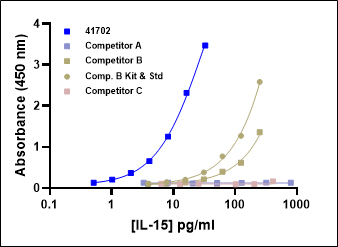
Figure 1. Detection of IL-15/IL-15Ra complex standard.
The IL-15/IL-15Ra standard is poorly detected (Competitor B) or not detected at all (Competitor A and C)
VeriKine-HS Human IFN-Alpha All-Subtype ELISA Kits
Many researchers recognize that there are 12 human IFN-alpha protein subtypes, but most assays on the market do not detect the full range of subtypes in healthy donors and disease patients, resulting in inaccurate quantification. PBL's kit is designed to detect all human IFN-alpha subtypes and has been tested with a variety of disease-state serum samples to minimize false-positive and false-negative results. The high sensitivity of this product (10X greater than that of other ELISAs) is particularly useful for discriminating among lower levels of interferon commonly found in human samples (Figure 2).
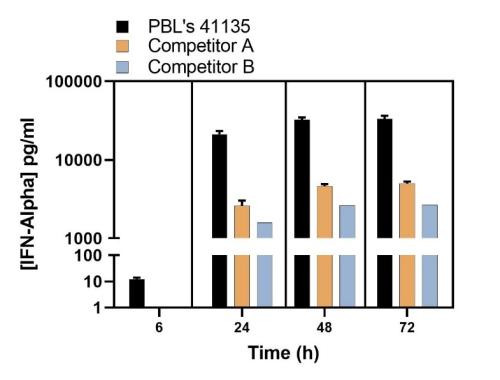
Figure 2. Levels of Endogenous IFN-alpha Quantified in Sendai Virus time course
(Black= PBL, Beige=Competitor A, Blue=Competitor B)
VeriKine-HS Human IL-22 ELISA Kit
Many ELISA kits struggle to accurately measure free human IL-22 in biological samples due to interference from IL-22 Binding Protein (IL-22BP), and many do not measure the low concentrations of IL-22 typically present in healthy-donor and disease-state samples. PBL designed its ELISA to effectively quantify free IL-22 at low concentrations, ensuring accurate measurement in both healthy-donor and disease-state samples (Table 1).
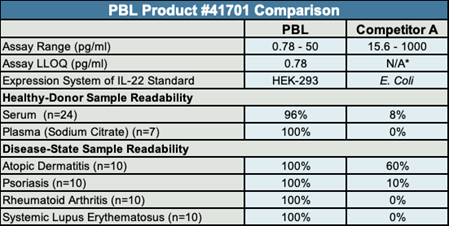
Table 1. PBL and Competitor Human IL-22 ELISA kit comparison.
Competitor A lists ELISA "Sensitivity" as 5.8 pg/ml, which we interpret as the
lower limit of detection (LLOD), Lowest Limit of Quantification (LLOQ) was not provided.
VeriKine-HS Human IFN-Beta ELISA Kits
Most ELISA kits do not measure low levels of human IFN-beta present in healthy-donors and disease patients. In addition, ELISA results can be artifically depressed if the assays do not measure IFN-beta that is bound to soluble IFN Receptor 2 (sIFNAR2), a receptor component often present in real-world samples. PBL designed its ELISA to accurately quantify endogenous interferon at low pg/ml levels and in the presence of sIFNAR2. The assay quantifies therapeutic IFN-beta molecules expressed in E.coli and CHO cells. It has been validated by CROs for use with autoimmune disease sera and for quantifying trademarked IFN-beta therapeutics (Figure 3).
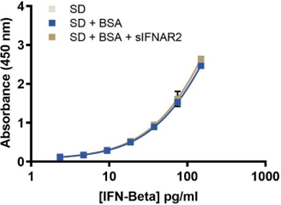
Figure 3. PBL's assay performs consistently with serum samples and
is not affected by the presence of sIFNAR2