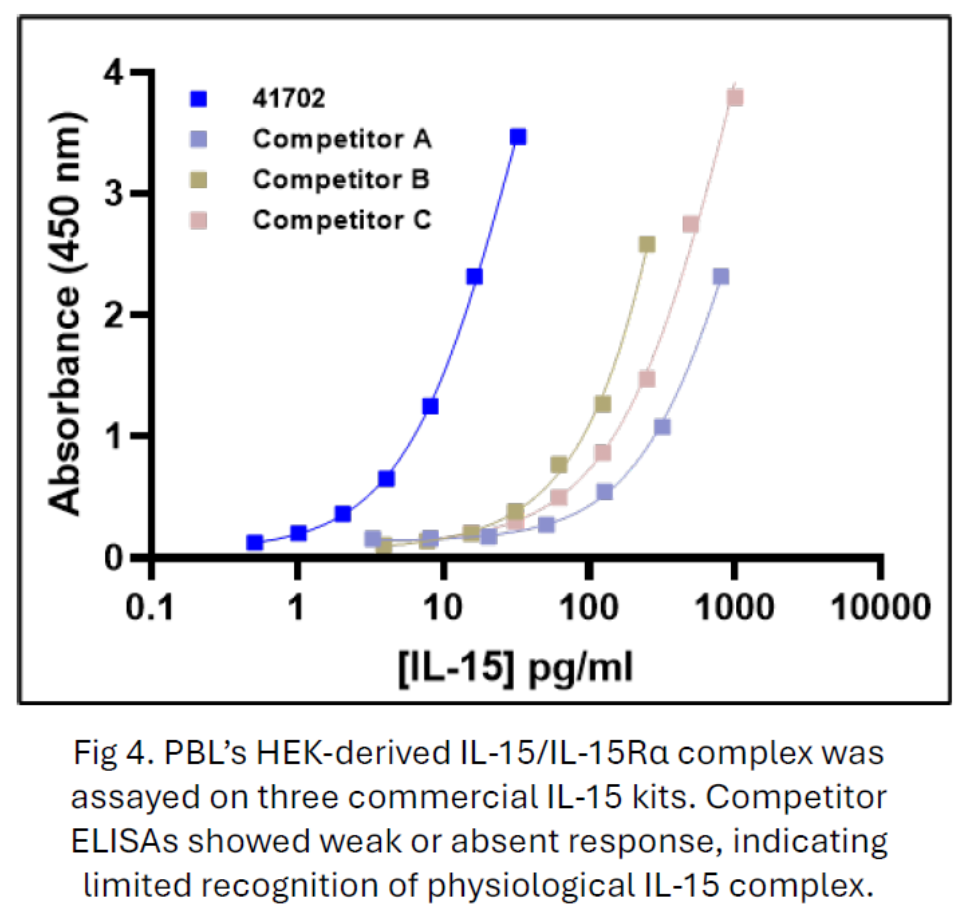
Interleukin 15 (IL-15) regulates NK and CD8+ T-cell homeostasis and exists mainly as a heterodimeric IL-15/IL-15Rα complex. Most ELISAs quantify only free IL-15, missing the physiologic complex. PBL's total human IL-15 ELISA (41702-1) uses a HEK293-expressed IL-15/IL-15Rα standard, capturing both free and receptor-bound IL-15, enabling accurate total IL-15 quantification in serum, plasma, and tissue culture media (TCM).
Circulating IL-15 predominantly exists in complex with IL-15Rα, forming a stable heterodimer that extends cytokine half-life and governs trans-presentation to NK and CD8+ T cells. Quantifying total IL-15 (free + receptor-bound) provides a more biologically meaningful assessment of immune tone than measuring free cytokine alone. this physiologically relevant approach better reflects cytokine activity in translational and clinical studies targeting IL-15 pathways.
Physiologically Relevant of Total IL-15 Measurement
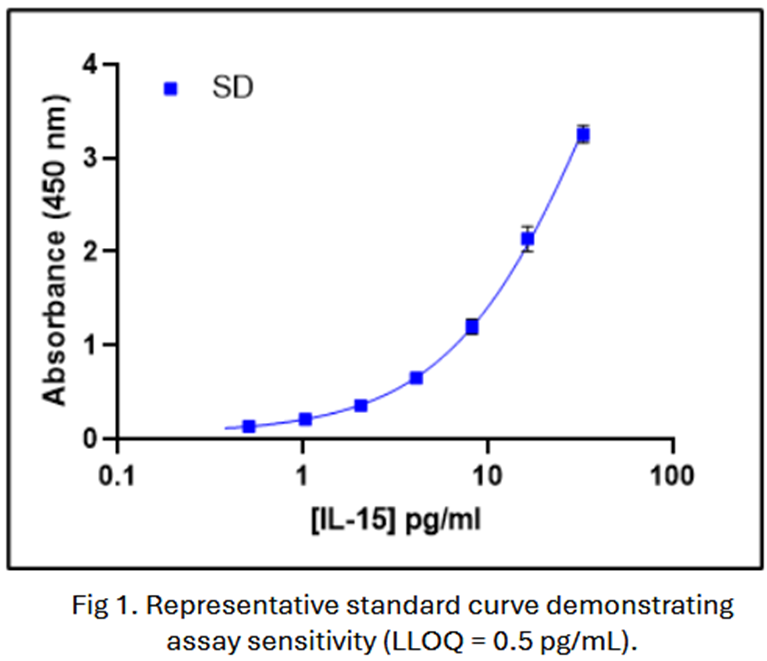
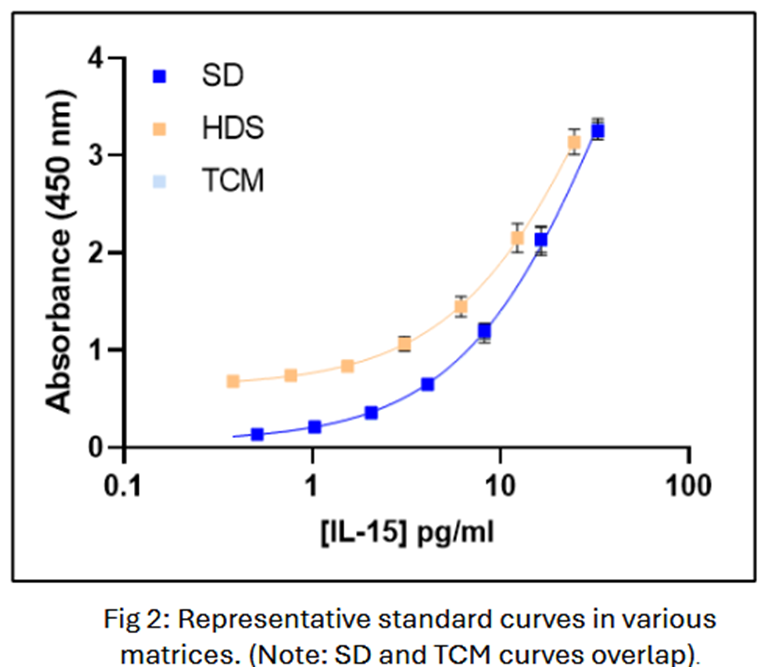
Specificity
No cross-reactivity detected with human IL-2, IL-4, IL-7, IL-9, IL-21, IFN-α, IFN-β1a, IFN-ϓ, IFN-ω; cynomnolgus IFN-α2; cynomolgus/rhesus IFN-α; mouse IL-15, IFN-αA, IFN-β, IFN-ϓ; rat IL-15, IFN-α1, IFN-α14, IFN-β, IFN-ϓ; bovine IFN-ϓ; or porcine IFN-α.
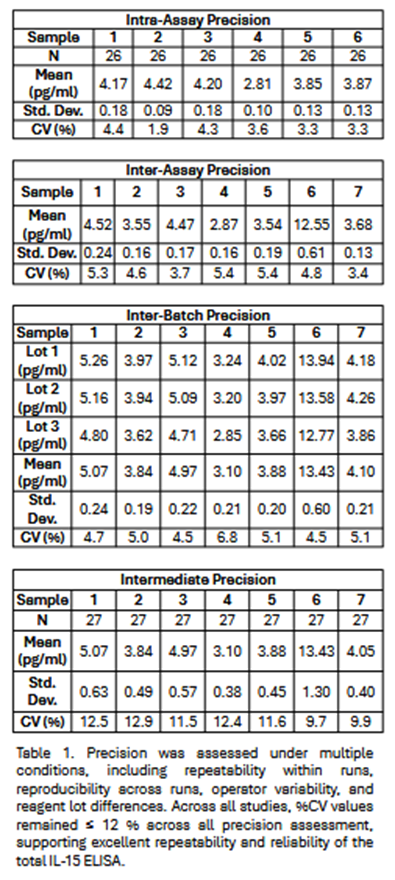
Precision
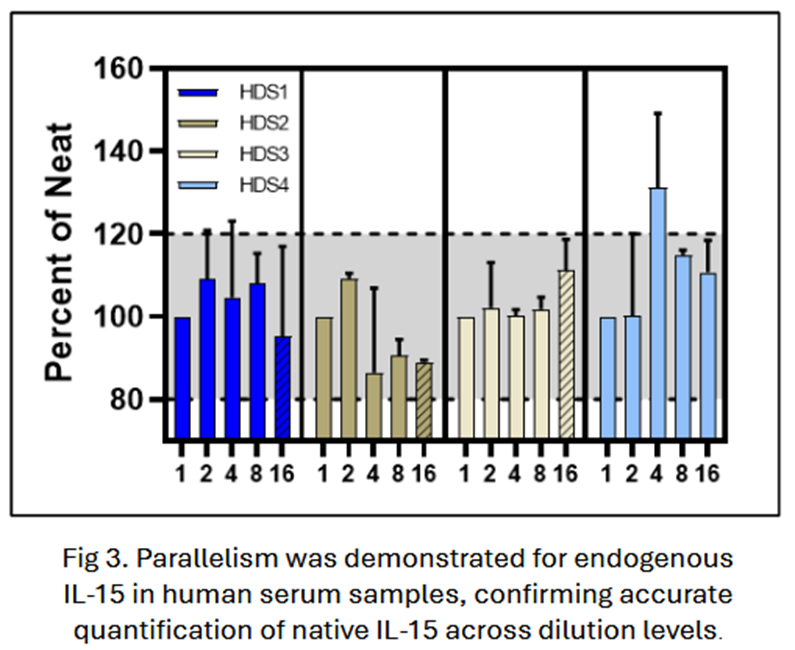
Parallelism
Performance Comparison
Conclusion
A physiologically relevant IL-15 standard enabled high assay sensitivity, strong precision, and reliable endogenous IL-15 measurement in serum and plasma. Parallelism confirmed accurate quantification across dilutions. Competing ELISAs showed limited detection of the IL-15/IL-15Rα complex, highlighting the advantage of a biologically relevant standard for translational studies.