 Powered by Bioz
With a 10-fold greater specific activity than the E.coli derived protein, this authentic sequence of Mouse IFN-Beta protein is glycosylated and has no tag.
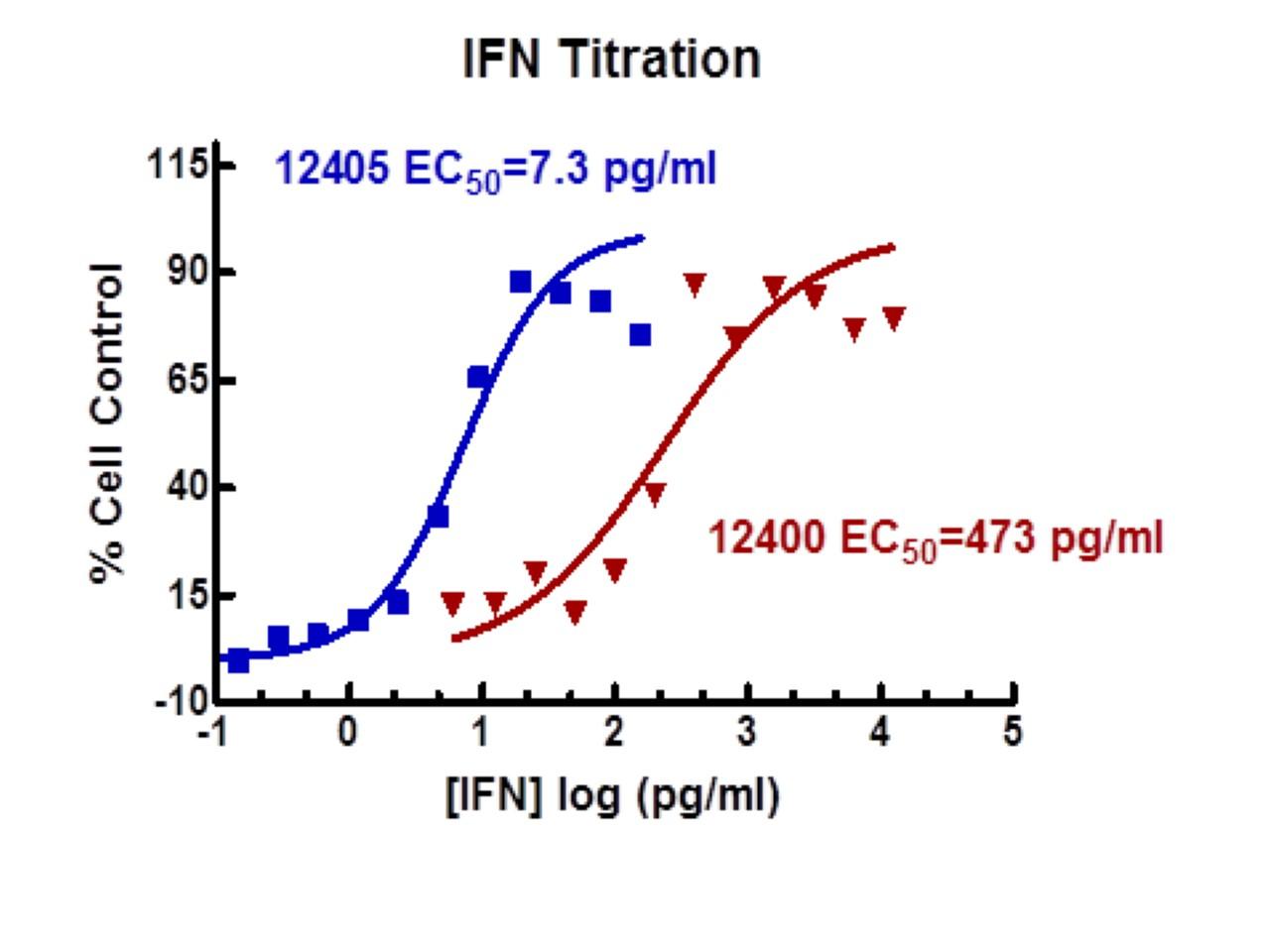
Mammalian expressed (12405) vs. E.coli expressed (12400) mouse IFN-Beta as measured in L929/EMCV CPE activity assay.
Product Info
| Bioactivity | Measured using a cytopathic effect inhibition assay on Mouse (L929) cells with EMCV EC50 for IFN Beta is ~ 2.5 U/ml |
|---|
Documentation
Certificate of Analysis (CoA), Safety Data Sheet (SDS), and Product Flyer
12405-1 CoA
12405-1 Certificate of Analysis (CoA)
12405 SDS
12405 Safety Data Sheet
12405/12410 Flyer
12405/12410 Flyer
| Formulation | Supplied frozen in 20mM Sodium Phosphate pH 6.4; 300mM NaCl; 5% Glycerol; 0.1% Bovine Serum Albumin (BSA) |
|---|---|
| Molecular Weight | 19.6 kDa |
| Source | Gene obtained from mouse DNA expressed in mammalian cells |
| Purity | > 95% by SDS-PAGE stained by Coomassie Blue Endotoxin level < 1 EU/μg |
| Storage | For retention of full activity store at -70°C or below and avoid repeated freeze/thaw cycles |
| Synonyms | Mouse Beta Interferon, Mouse IFN Beta, Mouse IFNB, Mouse Type I IFN beta, Mouse Fibroblast IFN, Mouse Fibroblast Interferon, Mouse Beta IFN, Mouse Type I Interferon Beta |
| Accession Number | K00020 |
Background
Interferons (IFNs) are a family of mammalian cytokines produced by macrophages, neutrophils, dendritic cells and other somatic cells in response to viruses and pathogens. IFN-Beta is classified as a type I IFN and is produced by fibroblast and a variety of cell types in response to viral challenge. Although all type I IFNs bind to the same type I IFN receptor complex, studies have shown that IFN-Beta signals differently than IFN-Alpha. Furthermore, it has been shown that IFN-Beta exerts preferential induction of apoptotic effect on melanoma cells. These findings, along with the therapeutic use of IFN-Beta in Multiple Sclerosis and hepatitis C, make further understanding of IFN-Beta biological activities an important area of research.
The mammalian expressed mouse IFN-Beta protein is designed to provide scientists with a highly active recombinant protein that closely resembles native mouse IFN-Beta.