Human IFN-Beta ELISA Kit, High Sensitivity (Serum, Plasma, TCM)

Catalog Number: 41415

This Human IFN-Beta ELISA measures interferon beta levels in human serum, plasma, and tissue culture samples with 1.2 pg/ml LLOQ sensitivity. This kit has been validated for the measurement of IFN-Beta in autoimmune serum and of trademarked IFN-Beta 1a and IFN-Beta 1b therapeutic molecules in human serum. There is no detection inhibition by 3-log excess of soluble IFNAR2 protein.


Product Name: VeriKine-HS Human Interferon-Beta ELISA Kit (Serum, Plasma, TCM)
$747.00
Pack Size
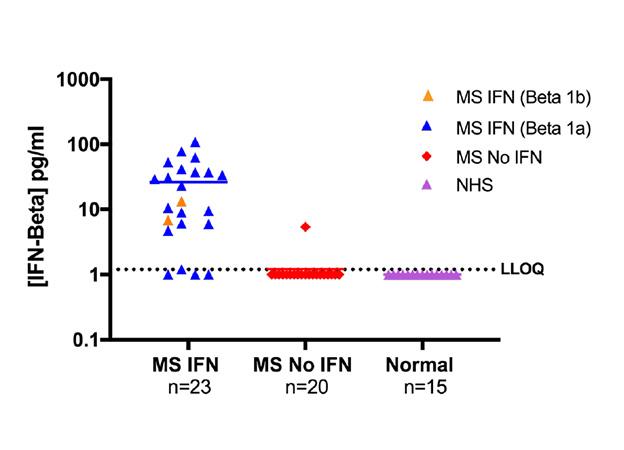
Levels of IFN-Beta Quantified in Normal Human Sera (NHS) and Multiple Sclerosis (MS) Patient Sera

Levels of IFN-Beta Quantified in Normal Human Sera (NHS) and Multiple Sclerosis (MS) Patient Sera

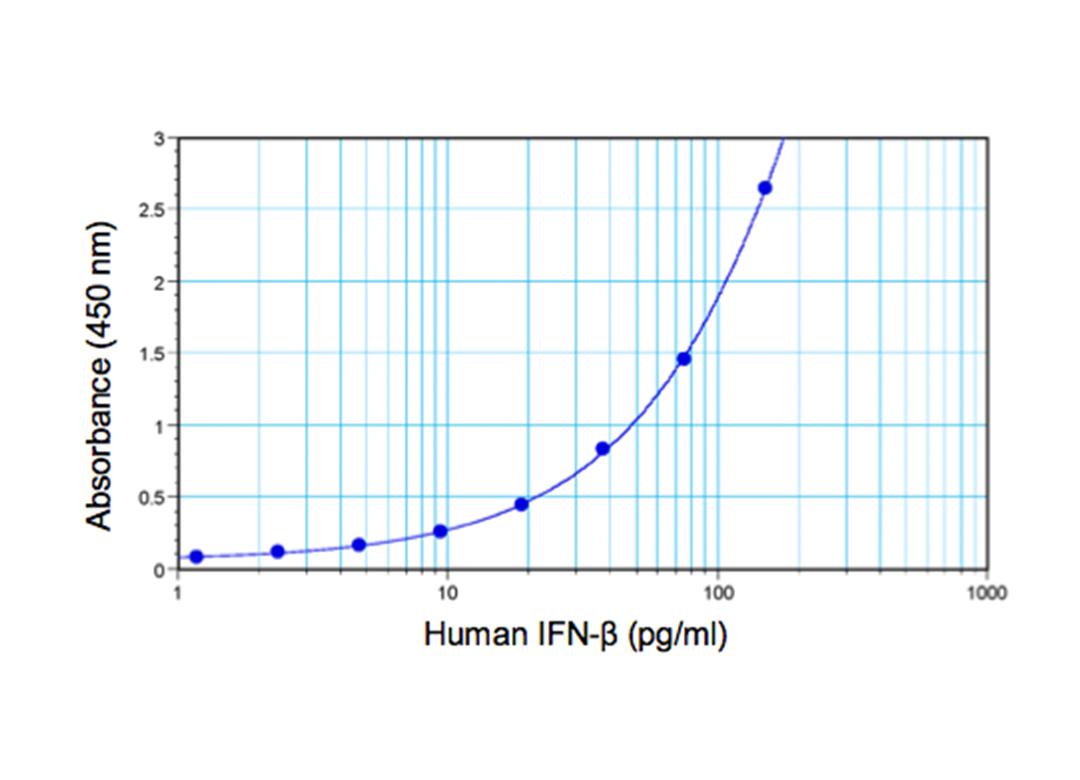
Representative Human IFN-Beta Standard Curve from 1.2-150 pg/ml using Protocol A.

Representative Human IFN-Beta Standard Curve from 1.2-150 pg/ml using Protocol A.

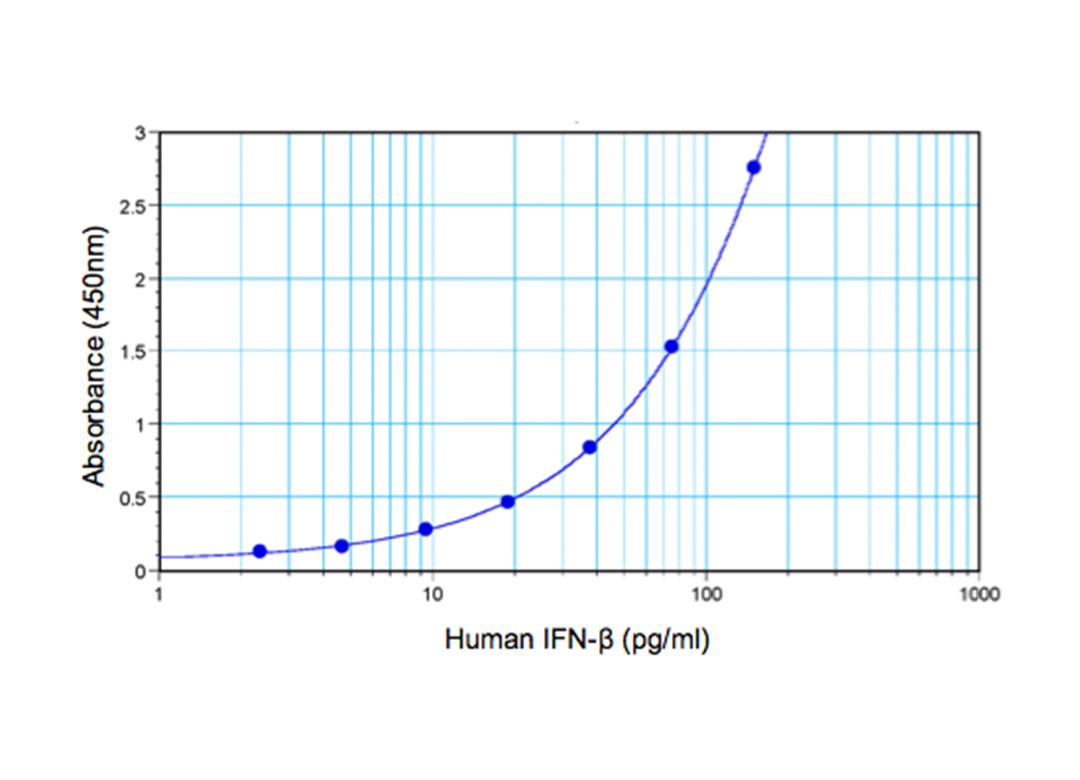
Representative Human IFN-Beta Standard Curve from 2.3-150 pg/ml using Protocol B.

Representative Human IFN-Beta Standard Curve from 2.3-150 pg/ml using Protocol B.

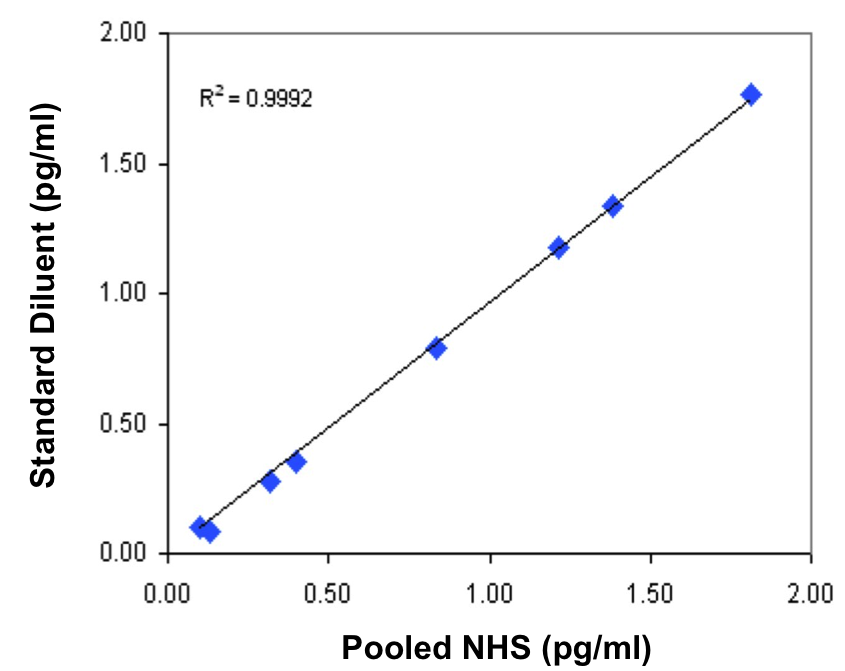
Correlation between IFN-Beta Standards prepared in Standard Diluent & Healthy Serum Pools.

Correlation between IFN-Beta Standards prepared in Standard Diluent & Healthy Serum Pools.

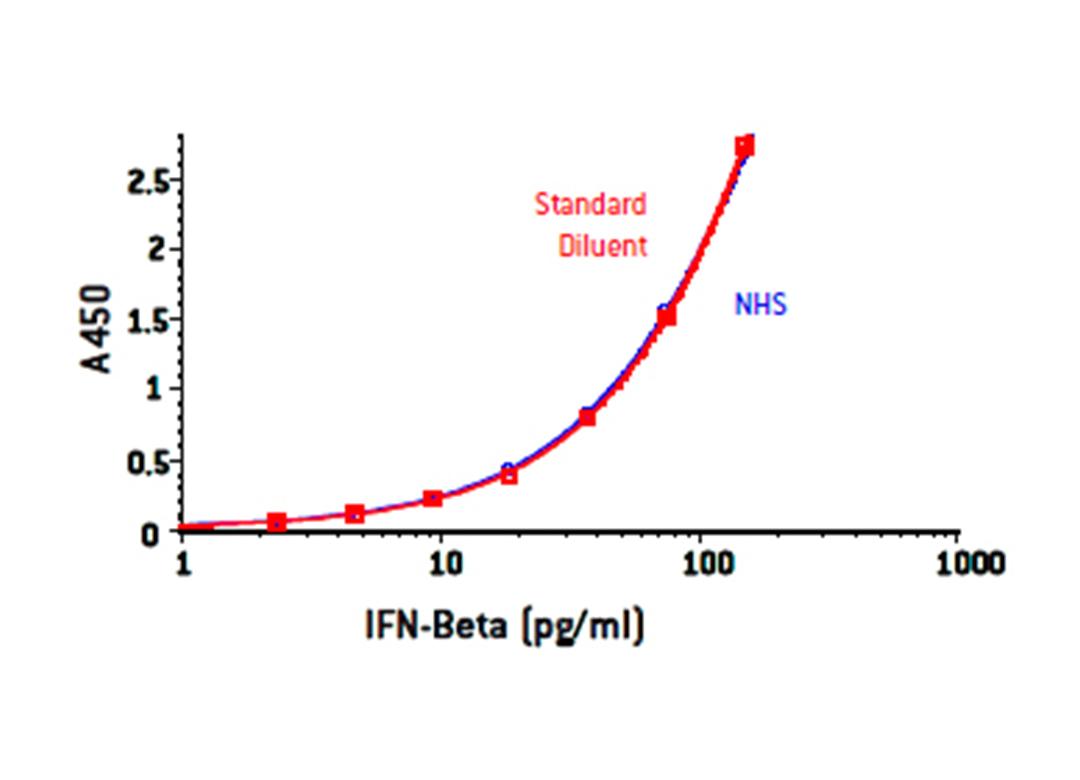
Standard Diluent mimics Healthy Donor Serum (HDS) in quantifying spiked IFN-Beta 1a.

Standard Diluent mimics Healthy Donor Serum (HDS) in quantifying spiked IFN-Beta 1a.

Product Info

Matrix CompatibilitySerum, Plasma, Tissue Culture Media (TCM)
Assay Range

Protocol A: 1.2 - 150 pg/ml (for improved serum performance)

Protocol B: 2.3 - 150 pg/ml

LLOQ

1.2 pg/ml

Need more sensitivity? Check out our Sample Testing Services

Assay Length

Protocol A: 3 hours, 30 minutes

Protocol B: 3 hours

SpecificityHuman IFN-β


The VeriKine-HS Human IFN-Beta ELISA Kit is designed to measure low or basal levels of Human IFN-Beta in autoimmune disease sera, healthy serum/plasma, or tissue culture media samples with 1.2 pg/ml LLOQ sensitivity.


This assay is suitable for the measurement of trademarked therapeutic molecules in human serum samples. Researchers and clinical investigators examining a) the pharmacokinetics of IFN-Beta molecules, b) IFN-Beta as a biomarker, or c) IFN-Beta as a pharmacodynamic marker of TLR agent or other immune response modifier activity will find this immunoassay to be an essential laboratory tool.


*For a TCM-compatible ELISA, we recommend our Human IFN-Beta ELISA Kit, High Sensitivity (Cat. No. 41435-1).

Documentation

Technical Data Sheet, Certificate of Analysis (CoA), Protocol, and Safety Data Sheet (SDS)

41415 Poster

Performance Characterization of a High Sensitivity Human Interferon Beta ELISA Kit in Healthy Serum, Patient Serum and Plasma Samples

CVs and Spike Recovery

Inter-Assay < 8%

Intra-Assay < 10%


Spike Recovery > 90% in Serum

Cross-reactivity


No cross-reactivity detected with:

  • Human IFN-α, IFN-γ, IFN-ω, or IL-6
  • Mouse IFN-α, IFN-β
  • Rat IFN-β
SynonymsHuman Beta Interferon, Human Fibroblast IFN, Human IFN Beta, Human Fibroblast Interferon, Human Beta IFN, Human Type I Interferon Beta, Human IFN B
Storage2-8°C
Expiration Date12 months from the date of manufacture
Shipping ConditionWet Ice


Materials Provided

  • Pre-coated microtiter plate
  • Plate Sealers
  • Wash Solution Concentrate
  • Human Interferon Beta 1a Standard, 100,000 pg/ml
  • Standard Diluent
  • Sample Buffer
  • Antibody Concentrate
  • HRP Conjugate Concentrate
  • Diluent Additive III (for use in Protocol A)
  • Assay Diluent
  • TMB Substrate
  • Stop Solution


Additional Materials Required (Not Provided)

  • Microplate reader capable of reading an OD at a wavelength of 450 nm
  • Variable volume microtiter pipettes
  • Adjustable multichannel pipette (50-300 μl)
  • Reagent reservoirs
  • Wash bottle or plate washing system
  • Distilled or deionized water
  • Serological pipettes (1, 5, 10 or 25 ml)
  • Disposable pipette tips (polypropylene)
  • Plate shaker

Background


Interferon beta (IFN-Beta, IFNb) is part of the first wave of cytokine response in cells. Pathogen infection can result in the activation of interferon regulatory factor 3 (IRF3) which functions in trans to activate IFN-Beta gene transcription. IFN-Beta is biologically unique when compared to other interferons and studies have shown that IFN-Beta has overlapping and distinct gene expression patterns as compared to IFN-Alpha. It appears that IFN-Beta binds to the Type I IFN receptor with higher affinity than the other Type I IFNs and it may also regulate receptor internalization in a different manner. Additionally, IFN-Beta has long been known to inhibit viral replication as part of the body’s innate antiviral response and is used as a therapeutic for the treatment of Multiple Sclerosis (MS) and some tumors.